Horses for courses

With my trusty secateurs at the ready I plunged into the overgrown bridleway trying to find the remnants of a trail. Unpassable at present by bike or horse a few evenings work will open it once more.

This seems to be my primary training program this year as everything seems to be growing at a huge rate. While being stung and scratched it gives you a little mind wandering time, a bit like ‘walking promoting thinking’ with more sharp interuptions.

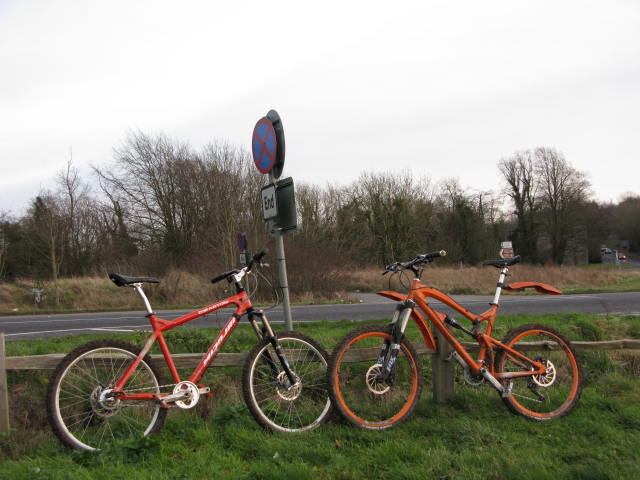
Just like everyone else I would like to ride faster and easier without earning the benefit from serious training so I have been comparing other bikes to my 33lb Nomad. Obviously a Blur is lighter, but not that much, so the key area for me is the fork. A Fox Vanilla 36 is great, but weighs about 2.5kg, whereas a Pace Fighter is nearer 1.5kg. In between at 2kg seems to be the compromise level for many others.

Other bikes, other forks and  other people’s opinions all help but there is no clear consensus as we all ride differently on different trails with different skills. So the best choice has to be ‘fit for purpose’  as although I might bounce off the odd lip or hang on down a washed out track I do not hurl myself off anything that would test a Nomad or a Vanilla 36.

Any big fork seems to be able to withstand large drops and heavy impacts and as a result tends to give a very soft ride on most trails with no handlebar buzz. A shorter travel fork tends to have a firmer edge but should stall less in a rooty hole or a ditch at low speed and be easier to manhandle due to its lower weight.

After a bit of changing of bikes and forks I find that the all mountain tag seems to combine lots of little details that suit a steeper fall line angle and a change of fork does not transform it into an xc whippet  nor does a big fork change a singletrack designed hardtail into a hardcore trail dropper.

So the answer seems to be more than one bike or horses for courses.

And as I drop my secateurs into my backpack  and turn to climb onto my saddle it seems I have been mistaken and at least one horse has passed through this particular bridleway and left some pungent proof on my front tyre.
jobs,jobs,jobs

Spring was sprung in a flurry of snow and rain, summer seems to have arrived immediately, and all the maintenance jobs that have built up over the winter need to be completed before long summer days begin to shorten.

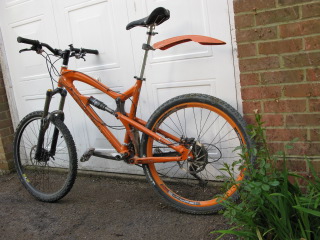
Some bikes may need virtual rebuilding of the transmission, forks, brakes, wheels and perhaps all the bearings and bushes in that clever linkage. Got a singlespeed, rigid forked hardtail and feeling smug? You still have a headset, bottom bracket, cables, and brakes. Obviously both hubs need servicing, wheels that need to be trued and maybe that maintenance free frame needs all the protective tape and patches replaced.

Forks seem to last almost forever nowadays until they fail and you fall off into a bomb hole at Pitch Hill. Some forks are less straightforward than others are when it comes to servicing and 36 Vanillas seems to need more than most. After checking component prices and even a tool or two perhaps consider a specialist like Mojo or TFShox. My Vanillas came back from Mojo with new lower legs, fully serviced and all for £100. So think about whether the service cost is reasonable especially considering the benefit of the warranty guarantee.

Rear shocks can seem perfect but when did you last even check the air pressure or the sag. Many shocks are an easy lubrication task with various guides in the bike magazines or online.

Brakes have improved dramatically over the last few years with all the latest models offering great stopping power and almost forget it reliability. However, mud, grit, rain, and damp storage are the perfect combination to encourage corrosion in even the most resistant alloys. Try removing your pads and pushing the pistons in your brake callipers fully home. You might have to allow some fluid release from the reservoir but also allows you to check carefully for signs of corrosion due to even the smallest of leaks and like your car they need re-bled occasionally or even the whole fluid changed. If you are lucky, you might just need to remove the pads and clean the springs before refitting. If it needs a little more then perhaps your local bike shop would appreciate the work.

Bottom brackets are easy to remove and now do not need complete rebuilding down to the smallest parts after a wet ride or two but a strip and re-grease will delay the time until replacement is required.
Headsets tend to work uncomplainingly but even the best units appreciate a wipe and some new grease. Cheaper models would be delighted with some new bearings too.

Transmissions are complex mechanisms that we want to be light, stiff, and smooth as silk when changing gear up a hill, in the mud under load. That chain that has had a bit of a clean and oil over the winter needs a close check for twisted links and for wear in its length. Use a chain gauge or a ruler to check the length for wear. Cassettes wear too so squint at all the rings. If the teeth look hooked then it needs replacement. While working at the rear hub take off the freehub and service it too. Replacement bearings and even axles are available and save loads of effort turning a worn hub up a hill.

Cables seem to look perfect even at the end of their life so if you want to check them cut off the cable end and pull them out of all the cable outers. If it is not almost perfect, new cables are cheap and easy to replace and it forces you to reset the indexing.

Front hubs require a clean and re-grease and bearings replaced occasionally.
Other parts seem maintenance free but check saddle rails for straightness and maybe a proper clean underneath and on top.

The seat post needs the clamp and bolt cleaned and regreased and the post itself checked for cracks.