Going, going, gone

IMG_3971IMG_3972IMG_3973
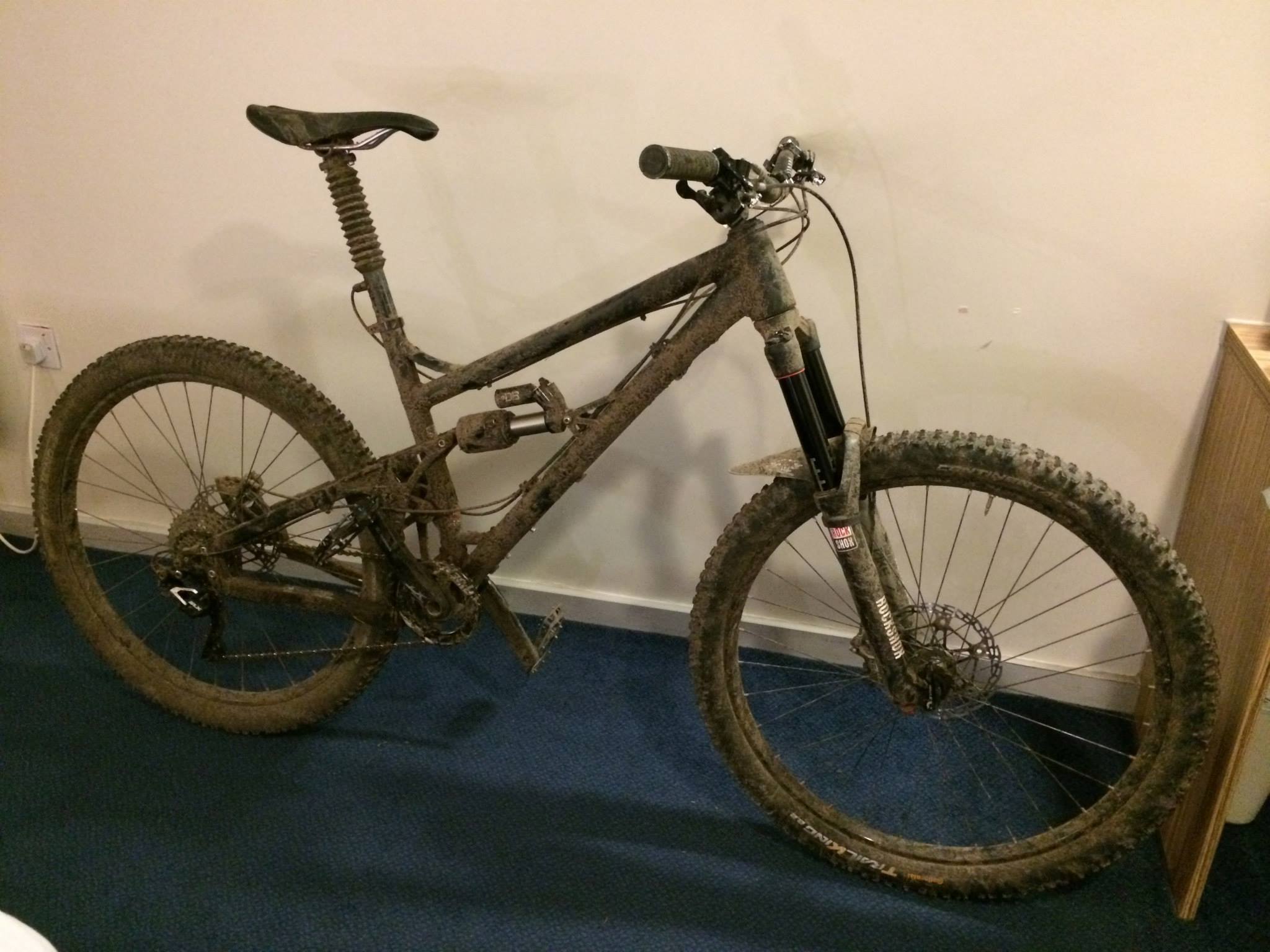
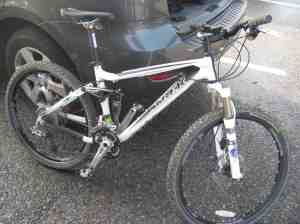
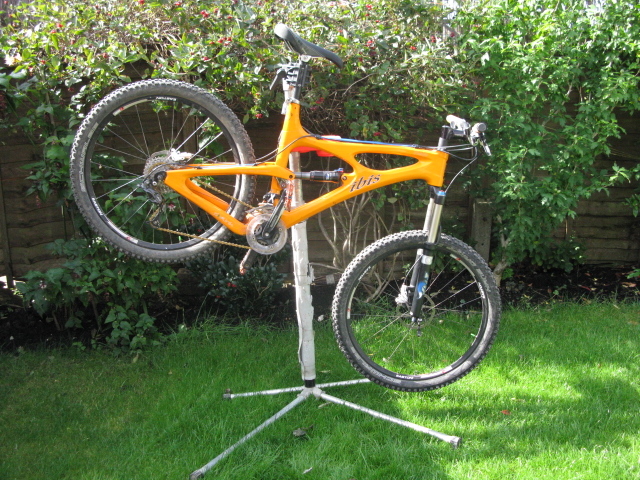
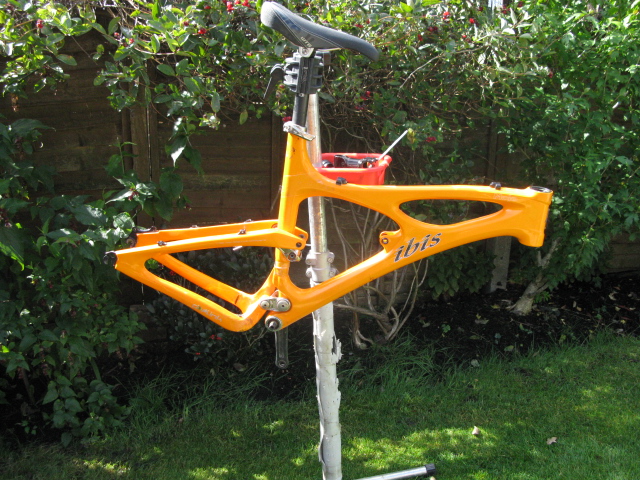
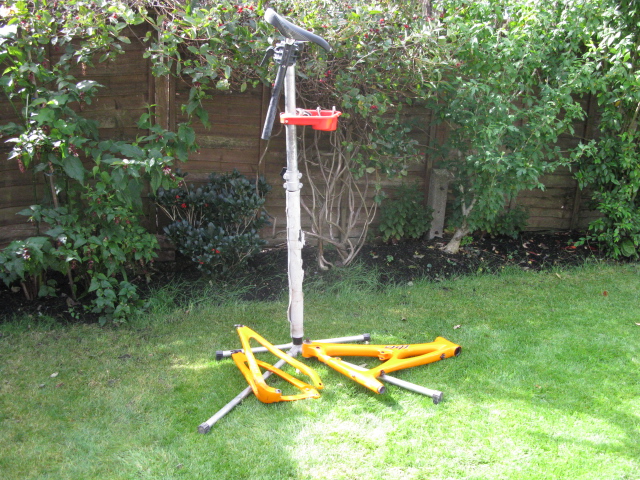
After many years and many thousands of miles my Mojo will visit Stanmer no more. It has died from internal injuries probably due to old age so it is time to be put down like a faithful hound or aged grandmother perhaps. Many hills, many trails, slightly less jumps perhaps but in all seasons and it has coped pretty well.

It can be a little flexible but a Lopes link improved this considerably and improved shock bushes kept it smoother for longer. Local chalk and clay does kill bearings so they have needed frequent replacement but quite a simple job to do this. Integrated headset was fine and needed just bearings when winter grime had leached inside and started tinworm on the ball bearing surfaces. Bottom bracket eventually struggled to cope with many changes of bottom bracket furniture but this was needed due to the high mileage and the poor conditions rather than any weakness or design fault.

Paintwork has been robust and solid but protective tape, lots of washing and little touch ups from the supplied pot have kept up appearances. Seatpost insert has been solid and outlasted a Joplin dropper post and is not creaky or a poor fit however it likes a little pot of magic carbon grease and lots of winter wiping.

It is a little old school in its’ geometry but it climbs well, traction is excellent, front wheel sits and steers on the ups and downwards it takes bumps well, it does not fall through the suspension travel if set correctly and has a light touch over the bumpy stuff. It jumps fine but squirms a little unless it lands dead straight and although the head angle seemed slack when new current figures make it seem steeper now.

As an all round bike it has coped with anything local and national but I never threw it off an Alp and it has not needed to suffer many jumps to flat at low speed but it has managed a couple of races, been lead bike in the dark a few thousand times, managed dozens of long distance rides with aplomb and been through and over most of the local flora and occasional fauna.

It was very expensive and only the longevity has justified spending the same on a bike as you could on a car so the law of diminishing returns establishes itself once more. The extra cost gets you newer, lighter, stronger and great quality but it is not twice as good as something half the price but it is a bit better. Everything is made to size and replacement bits fit nicely. Tolerances are tight but this a good thing allowing the bike to feel a bit tighter than you expect on rough stuff.

As an early adopter of the carbon frame the early question was always strength, especially on impact, however the ibis has been grounded over obstacles, had flint chunks fired at it, been dropped more times than I would like to admit and the frame has shrugged it all off. Keeping any frame for years and years and in use rather than hanging forlorn on the garage wall is not a common thing but better, lighter frames are not that common even if price is not a factor. The suspension using the DW link is super for pedalling and better than my previous Nomad or Marin suspension systems in most situations that I usually ride.

As it has had a long, hard life I expect the wear and tear marks are commensurate for this but if you were considering any second hand frame, especially carbon there are a few detailed photographs to aid your inspection.
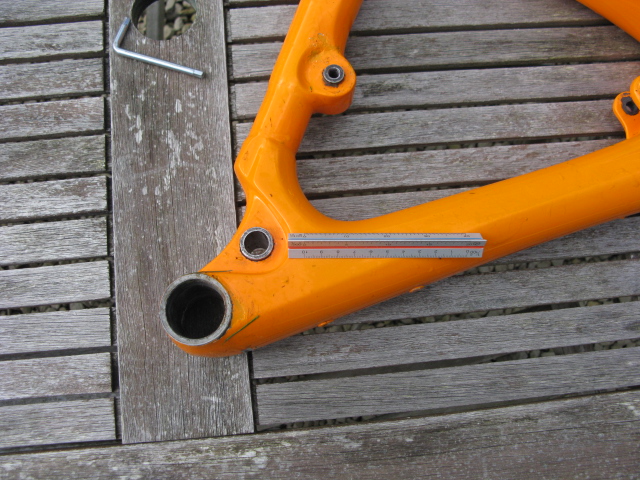
IMG_3974This is the insert for the lower link and is is loose inside the frame. I have heard of this in frames of other makes so checking really carefully is required in order to notice the slight initial movement of an assembled bike. Under no shock force and link removed it wobbles with your fingers.
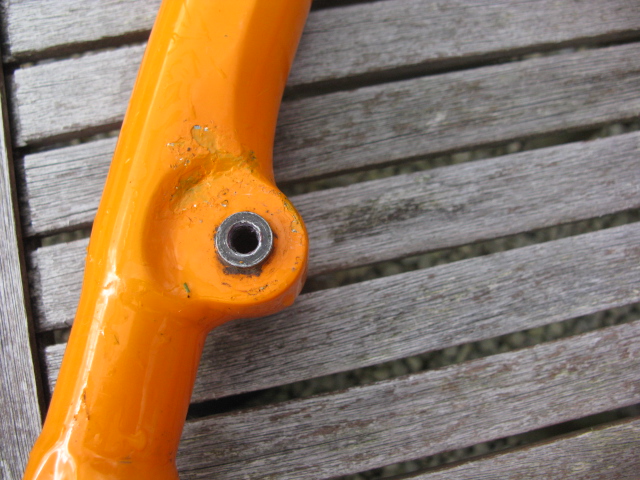
IMG_3975Upper link point is fine despite a million movements so carbon itself does not wear out if there are no friction surfaces.
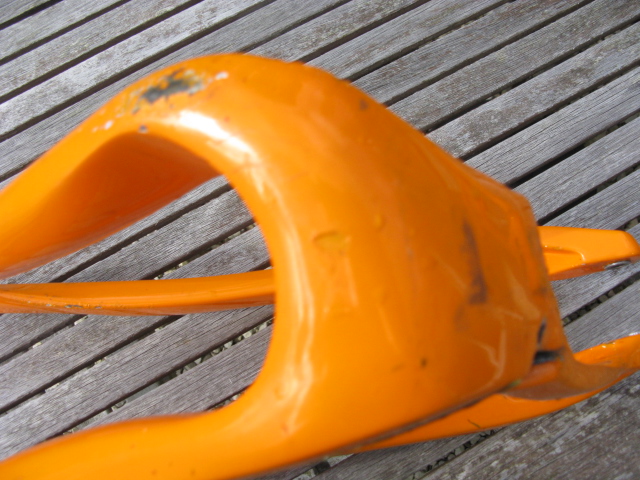
IMG_3978

Bottom of the rear triangle which is the lowest bit of the bike and which bottoms over logs and rocks. Super solid, seemingly very, very thick and not covered with dings and dents – part of the price paid here.
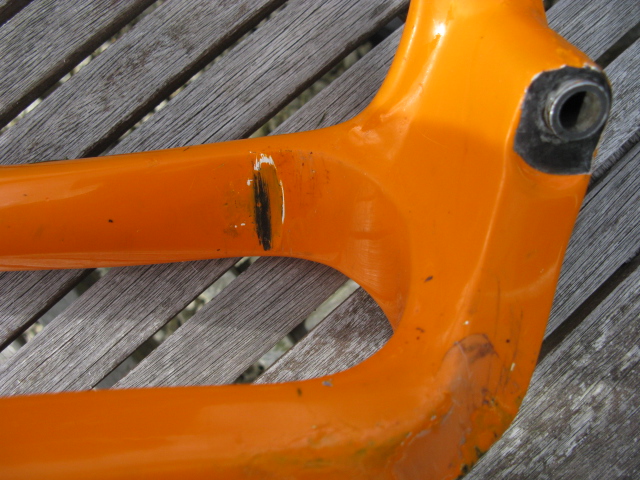
IMG_3979Running a fatter tyre in wrong conditions caused a little wear when the mud built up however prudent tyre sizes avoided a repeat of this and this was years ago so no time based fatigue of the carbon matrix


So great bike for me and a difficult problem in choosing a replacement with the obvious criteria of colour paramount. Thursday nights in the dark just don’t seem right without an orange flash somewhere in the trees.

Ronnie
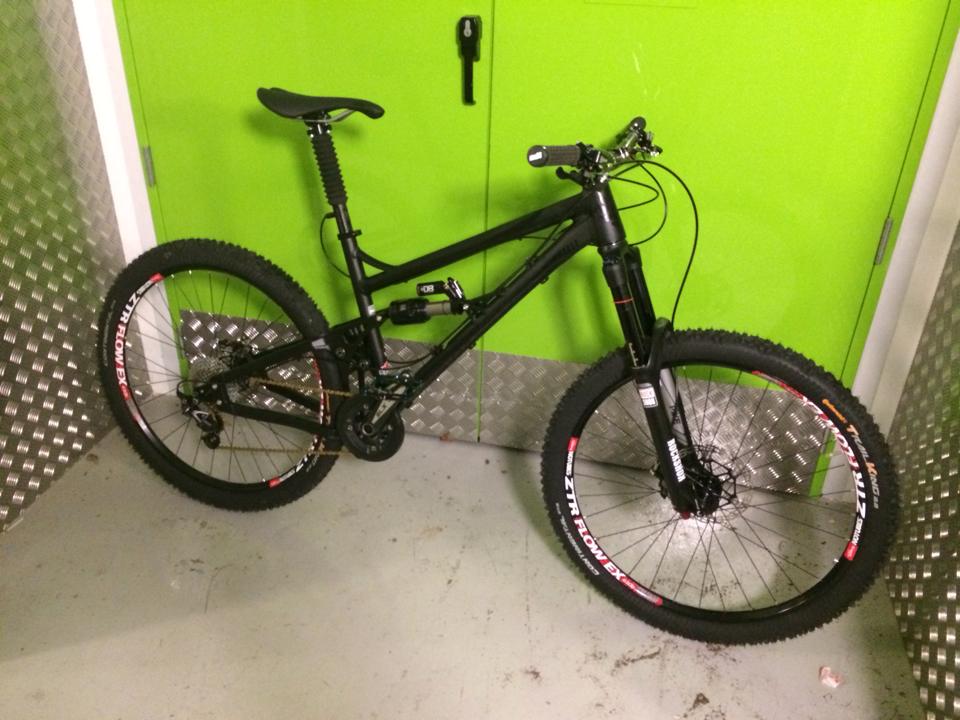
A review! Banshee Spitfire v2

It looks like it rides – big, fast and generally bad-ass. An anodised matt black alloy frame with the decals in satin black – if you have to ask, you’ll never know. “Born on the Shore” in full colour. Tidy welds, hydroformed tube shaping, some neat gussets, sensible external cable routing, easily adjustable geometry and a zero stack head tube and low top tube for getting rad newspitfirein the corners. Takes a front mech, 140-160mm forks and 26 or 27.5 wheels with a choice of dropouts. Build it your way. My way is 27.5 Flow EX rims, 142×12 dropouts, 160mm Pike and  CCDBair – downhill weapon! We’ve done getting on for 1000 miles together in our first year, with very little easy mileage, lots of climbing (and some uplift) in the pursuit of good descents.

Don’t buy this bike if you like staying glued to the ground, avoid going fast or shy away from steeps. Point it downhill and it shouts “STRAAAAAVA!!!” Tip in over the edge of a seemingly vertical plummet and it’s totally like yeah, whatev’s. Hit a jump and it’s an exhibitionist – higher and further than you’ve ever gone before. It took me a while to get my head around its abilities after years on a 140mm hardtail.


It climbs weirdly well – the steep seat tube puts you in a good position and it doesn’t go all squishy when you stand up and stomp, tyre just digs in and bike springs forwards. Loves pedally trails as long as you don’t try to get the first stroke in too soon out of a corner because the bottom bracket is pedal bashingly low. Definitely better with 170mm or shorter cranks unless you’re very tall.

jumpyspitfireThere is such a thing as too slack – on my local trails it’s happiest in the neutral setting with a head angle of just over 66 deg. For uplift days with faster rougher trails and less pedalling it’s awesome slackened and lowered to about 65.5 deg HA and it’s literally a 10 minute job to switch the drop out chips. How can a 140mm bike be so good in the rough, so plush yet never bottoming out harshly? The KS-link suspension must be magic (looking at some linkage analysis I believe it’s actually a combination of lots of anti-squat, progressive leverage rate, rearward axle path, minimal shock bushing rotation, stiff frame with short forged links and good bearings and a really great shock).

Running 1×10 with an 11-36 cassette there’s too much chain growth (~40mm at bottom out) for a super short Zee mech to be happy so I swapped that for a medium cage SLX (with clutch obviously). No guide (though there are ISCG-05 mounts) but a 32t narrow-wide and bash. Acres of mud clearance with the 27.5 dropouts so if you prefer very short chainstays you could run the 26 dropouts with a 27.5 wheel. Don’t underestimate the bigger wheels – despite all the marketeers’ hyperbole they do roll a bit quicker and grip a bit harder. The more obvious difference is the extra stability – like slackening the bike by about a degree or running bigger heavier tyres but with no detriment to climbing.bermyspitfire

Go too burly with the tyres and/or run too much damping and it becomes a straight-lining monster truck – unstoppable but hard to move around. With quicker rebound and less huge tyres (Trail King 2.2 Protection in my case), it’s a much lighter livelier ride, easy to adjust your line mid corner, find that pop to clear roots or rocks or double up rollers and make gaps – and it still has that high speed stability that dares you to ignore the brakes.

Ironically the famously complicated Cane Creek has required almost zero tuning effort – one benefit of being average height, weight, quickness and jumpiness is that their recommended base tune with 28% sag is bang on for me. I slowed it down early on because I was finding the bike a handful on bigger jumps but as my confidence grew I reverted to the faster base tune and it feels amazing. The Pike has taken much more tweaking to balance with the rear – varying sag, bottomless tokens (aka volume spacers to add spring progression), low speed compression and rebound. The end result of 25% sag, two tokens, quite a bit of compression damping and fairly fast rebound gives it the grip in the turns and the pop on the jumps.

This build is all about reliability, strength and stiffness (and is zero carbon) so it isn’t the lightest bike in the world – about 31lbs. The frame and shock is 7.7lbs of that. Only feels heavy when doing the one-armed bike-in-the-air gate/stile shuffle, so that’s good. With the bigger wheels and slack head angle it needs wide bars and a short stem – 750 and 50mm. And with the speed it carries into corners, good brakes – Hope Tech 3 E4 with 183mm discs. Started out with a 160mm disc on the back and it wanted more – brake later, brake harder, use all the grip that great suspension offers. Dropper post because it would be madness not to – Gravity Dropper Turbo LP (reliability trumps aesthetics!) Lizard Skins Logo grips (if you’re looking for a grip that isn’t super skinny nor mega fat, not super tacky nor really hard, try these). Charge Scoop saddle – like a Spoon but nicer. DMR Vaults (thin, concave, nice pins, really big platform). Hope headset, hubs and bottom bracket (been flawless on the other bike for years).

dirtyspitfireWhat would I change? I’d quite like it in an obnoxiously bright enduro-compliant colour but can’t deny the uber stealth look is cool (especially since de-stickering the rims). One of those integrated moulded rubber chainstay protectors would be nice – I have a neoprene one plus a few thick zip-ties where the chain is closest.

The geometry is just so right – long, low and slack but not too extreme so it still rides well on flatter trails. Sizing is good – I’m 5’10.5″ on a spacious but low slung medium (16.9″ seat tube). The short seat and head tubes mean you can size up and run a super-short stem for a longer wheelbase ‘forward geometry’ feel. The KS-link suspension and CCDBair are sublimely good. If you have the skills there’s no doubt this could win enduro races. If, like me, you don’t then you can have awesome fun fighting for mid-pack places. For my riding it’s better at everything than my Cotic Soul – thankfully the hardtail is still fun, switching between the two makes me a better rider and I feel happier neglecting my unwashed Soul through the winter mud and wet on my local rides.

Should you buy one? If you’re after a 6″ish enduro bike that can descend like a bigger bike but is still fun on flatter singletrack then I can’t think why not. If you’re in Brighton have a word with Freedom Bikes – you’re welcome to try this one (which they built up) as long as you promise to give it back…

—–

I could have just said “I really really like it!” 😉

Alex

Continue reading

First ride: On-One Scandal 29er v2


  scandal3

The build


I was after a reasonably priced 29er hardtail which I could cobble together with old parts and then use for cross-Downs duties and as a winter hack.  The official excuse for a new bike – if I needed one – was to use it for commuting.  If I could end up with something that would be fun on the trails at the same time, all the better.  Having never ridden big wheels on a mountain bike before I spent a fair bit of time wondering about the impact of different geometries and considering what to look out for to give a good ride.  With advice from a certain Brighton MTB member I focused on thinking about the ‘right’ combination of head angle, chainstay length and bottom bracket height, along with sufficient mud clearance for Stanmer in winter and the right mix of components to balance weight against cost. Continue reading

Jones Ti Spaceframe

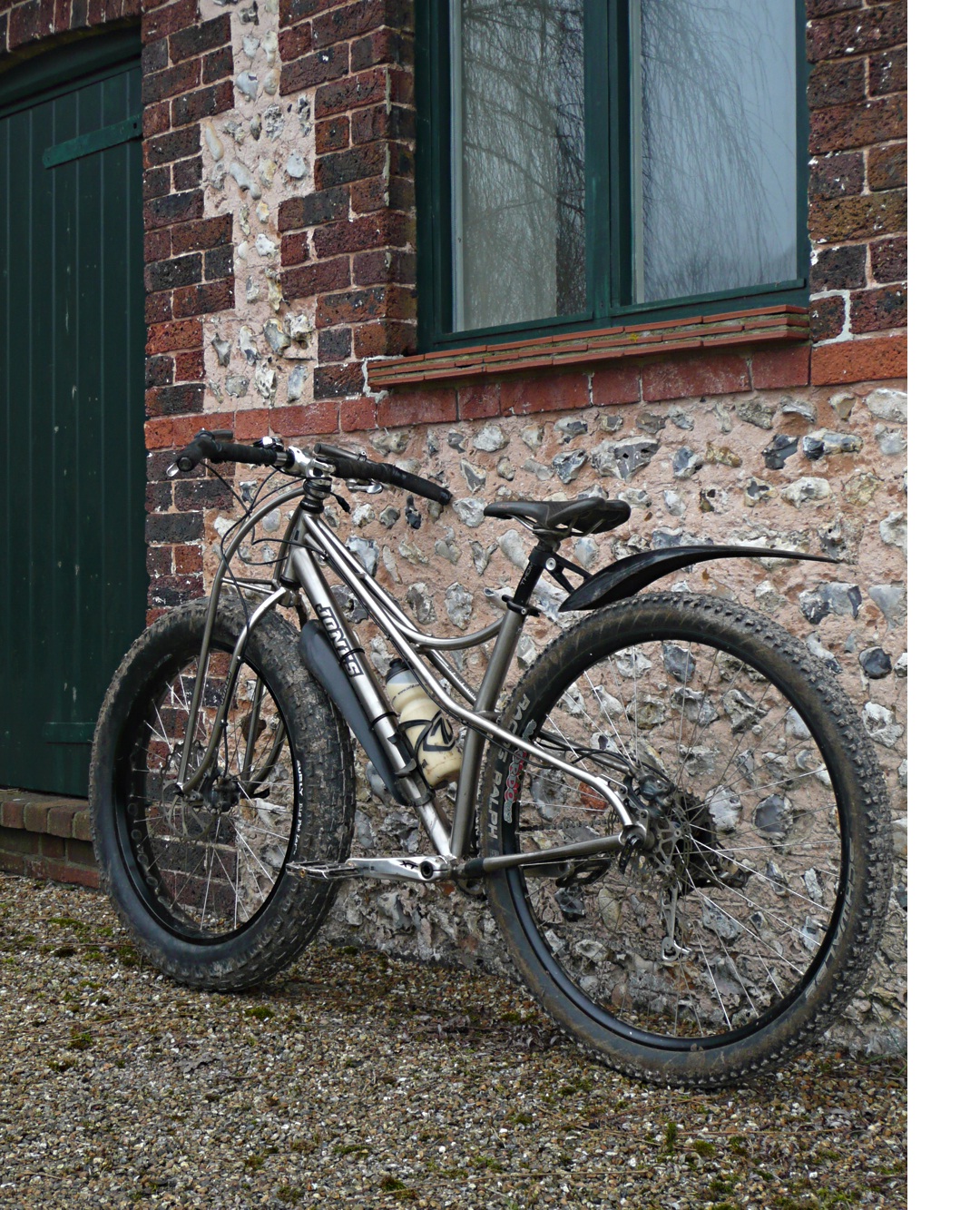
Looking at the current STW thread on Jones, now topping 130 posts is easy to forget one thing, the Jones is a just a bike, nothing more, nothing less, it’s not a magic bullet, it’s not a cure for cancer or create world peace.

Ok now we’ve got that sorted, here goes………jones1 Continue reading

Devinci Dexter

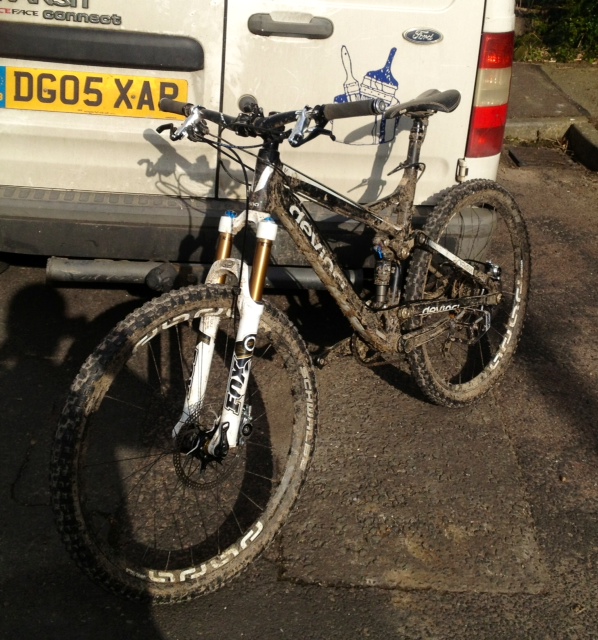
laurie1

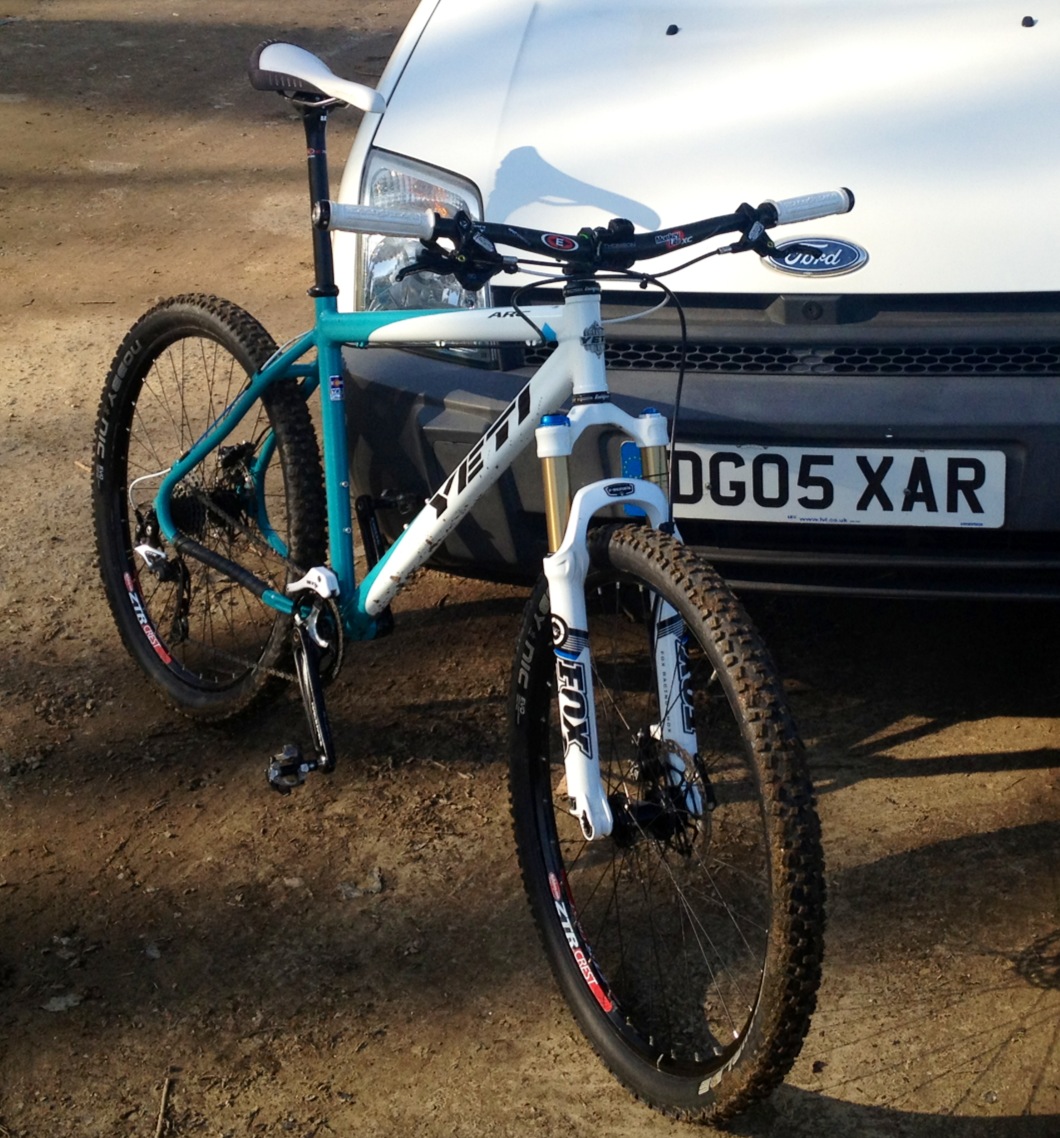
Coming frolaurie4m having only ridden hardtails (mainly due to the high cost of full sus frames) I decided to take the plunge into my wallet and buy a new frame. The hardtail I had was a Yeti Arc, although fast light and great for Stanmer trails, was aimed at the more xc end of riding.

I wanted a stronger frame I could take most places and not worry about breaking it, or myself, in the process, plus the 100mm of travel up front limited me to what I rode and how fast I rode it.

Continue reading

Chinese 29er review- Carbonal Gaea 29er

Ronnie had recommended I try a light weight carbon hard tail as a winter race/training bike as my steel 29er is too heavy with gears. As much as I’d love a Scott Scale or a Santa Cruz Highball the high frame costs are out of my reach. I’d seen a forum thread on MTBR which featured Chinese carbon 29er frames, it was almost 100 pages long and mainly positive views. Continue reading

On One 456 carbon

First impression after getting the frame out of the box was how light it was; compared with the steel 456 it replaced it’s incredible. Lacquer finish etc was ‘ok’ but for the price you can’t complain. I bought 2 sets of bolt on dropouts – one for gears and one for singlespeed – I’ve used some thread lock on the bolts attaching these and had no problems. The various inserts seem to be aligned well – I quite like the idea of the BB being inside a threaded aluminium sleeve – any water that does find it’s way into the frame isn’t able to get to the BB bearings.

Originally I had planned to be running it with gears but, following a frame failure and a complex parts swap across three bikes it turned out to be a singlespeed in the end. I built it with some 130mm Pace RC41’s but have subsequently fitted some 140mm Marzocchi 44 Micro Ti forks with a QR15 axle. Other parts are Easton low rise carbon bars, 90mm stem and carbon seatpost, Magura Louise brakes, XTR cranks, Salsa cog/ring and Hope Pro2/DtSwiss wheelset. Complete with the 44’s it weighs about 22lbs.I rode it for about 3 months with the Pace forks and was never entirely happy with it – the front end just didn’t seem to allow me to ride the woods at Stanmer the way that the back end seem to be indicating it could. After the fork change the whole bike seemed to come together – the solid front end now tracks really well, deals with roots and obstacles cleanly and the back end (helped no doubt by weighing next to nothing) obediently follows wherever it’s led. I do sometimes miss the ability to lock down (rather than out) the forks but even with a 140mm forks I don’t seem to suffer from wandering climbs – probably as much a result of the bikes geometry as the fact I’ll be stood up pulling faces on anything with a significant gradient due to the lack of gear choices. I know this is a frame review but these Marzocchi forks are great – I’m so impressed I’ve got a set at 120mm on my steel Kinesis Decade Versa.

As well as pinging off and over logs and roots around Stanmer I’ve taken the bike out on a 31 mile Wiggle organised ride on the North Downs (route here – http://connect.garmin.com/activity/83177769) and whilst this was by no means a technical ride it did show me that the bike is far more comfortable over a reasonable distance at good pace than the steel bike it replaced. It’s a solid feeling bike (more so than the steel in some respects) but it has an ability to not transmit ‘chatter’ off the trail that leads to a much more relaxed ride feel.

So, is it worth a couple of hundred quid more than the steel 456? At the moment I’d say yes – it seems to flatter my somewhat mincing approach to obstacles more but at the same time not leave my lower back asking for a rest after 15 miles. This is my first carbon frame and whilst I’ve no reason to doubt its’ longevity there is always a slight worry about crash damage and overall lifespan. I’ve heli-taped the whole down tube and various other places where cables may rub. A good chain stay protector is a must – the stays are so deep I get chain slap occasionally, even running singlespeed with a well tensioned chain.

Things that bother me about this frame – mainly transmitted noise – the slightest squeak from a component (and I’ve not got that many running it SS) seems to be amplified through the frame to the point that you think it’s about to fail – a ‘failing BB’ turned out to be a chain that needed a bit of lube after one very wet ride. It can sound like a Tupperware box full of marbles being shaken on fast descents with loose stones on them as various bits of high speed geology hit the frame. I had some problems getting a disk calliper to fit – they run inside the rear triangle and with the slidey dropouts there was no room for a Magura Marta calliper. On-one do a different non-drive side dropout for geared use that runs the calliper above the seat stay but this won’t work with a SS setup. The only other issue I’ve had is with the On-One headset I use to run a 1 & 1/8th steerer in a tapered frame – it’s been difficult to get it to run consistently tight enough without being ‘too tight’ – the bottom bearing also needs cleaning out and re-greasing far more frequently than I’d expect on a £40 headset.

So, overall as an upgrade from a steel 456 what have I gained? Well, I’ve not lost the geometry and dimensions that made the steel frame into such a nice ride, which was critical for me. I’ve now got a lighter frame that seems to do everything the steel bike did but it does it all with just a bit more panache.

Oh, and it’s not pink.

Luke

Review: Trek Fuel EX9

Nick's Trek Fuel EX9

One of the brightonmtb crew has been nagging me for months to write a review of my Trek Fuel. When that person is obviously incredibly technically-minded, whereas I can only change my pads and mend a puncture but little else, that is quite a daunting task. However, a promise is a promise so I will do my best.

The Trek is my first full suss, after happily riding a Rockhopper for 3 years. I loved the Rockhopper (and still do), as it was my first ‘proper’ mountain bike and introduced me to the joys of off road riding. I explored miles and miles of bridleway on and off the South Downs Way on the Rockhopper every weekend as soon as the sun rose on a Saturday morning. However, it wasn’t till I went to the Brecon Beacons and rode up and down the Gap that I realised that hardtails and slabs of granite are not the best combination!

I started the inevitable months of research for a full suss so I could revisit South Wales, and narrowed my choices down to a Scott Scale, Stumpjumper, Giant Trance or the Fuel. On the way to Whiteways is Southdowns Bikes in Storrington, owned by the very helpful and friendly Martin. At the time they stocked 3 of my options so I was able to test all three easily and cost effectively. While I was drawn to the Stumpie, the Fuel just felt right as soon as I started to ride it and the white and black finish of EX9 08 version looked brilliant.

So how have the first 18 months been? It took a while to get used to the Fuel and I tended to alternate between the two bikes each weekend. However, a trip to Cwn Carn really showed the benefits of the Fuel. While it is not the lightest bike(at 28 plus lbs), it stills climbs well but it was the bike’s descending capabilities that really made the difference giving me far more confidence as it soaked up nearly everything thrown at it. This is where I believe the ABP system, which places the pivot on the rear axle to remove brake influence on suspension movement plus the Full Floater, where the rear shock is placed on the extended chainstays, moving down as the rocker compresses the unit from the top, really come into their own smoothing out the trails.

The bike is well specced with 130mm travel up front (Fox Talas) and 120mm at the rear (Fox Float RP2), Juicy 7 brakes and a Shimano Deore/Sram combi drivetrain. I have made very few changes to the bike, apart from replacing the uncomfortable Bontrager saddle a with a Fizik Gobi (a popular saddle amongst the brightonmtb group). Despite the tubeless ready Bontrager Race Lite wheels I have still not converted to tubeless preferring to replace the Bontrager tyres with Panaracers (Trailrakers, Cinders and Razers depending on the conditions) as I have found these to be the best for puncture resistannce.

So would I recommend the Trek Fuel?

I love it and I would highly recommend that any first time buyer of a full suss who wants to build their confidence, tackle more challenging terrain but still enjoy a mixture of xc plus singletrack riding should really consider this an option.

As What Mountain Bike said in a recent review ‘What really elevates it above some strong competition is its ability to flatter pretty much everyone’s riding style’. It certainly flatters mine.