hello motec

goodbye kona

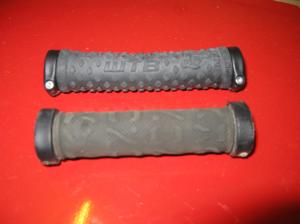
The old grips have served on the old bike and the new one but the rubber is worn out and one of the inner clamps has split. They have lasted well, never slipped and been on and off a few times for cleaning and shifter swap duties. I have soft hands and always prefer softer grips as a general rule but the Kona ones replaced some very soft WTB ones that wore out within a few weeks.

Overall 8/10 as they were a little hard and I prefer the raised shapes to fit my hand rather than spell the manufacturer’s name.

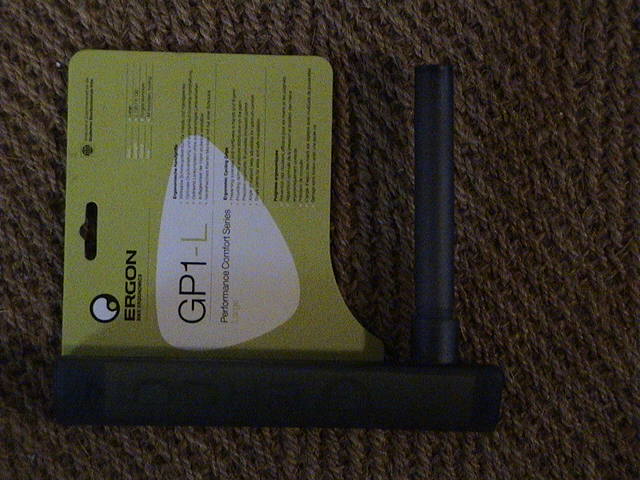
The new grips are on and the plastic clamp seems kinder to carbon handlebars than the Kona metal. Instead of a solid inner tube they have a cut out section which allows the grips to deflect inwards which feel softer.

Curiously there was no orientation diagram on the packaging but the website has full instructions. It seems a simple thing but I wonder how many people would rotate them by 90 degrees to move the clamps forward for easy closure rather than correctly underneath and in the way of my shifter levers.

On the up side though I have a reason for another tool in the bike shed in the form of a computer in order to cross-check manufacturers instructions. On the down side my neatly filed box of all my bike bits instructions has become extinct.
Scudo

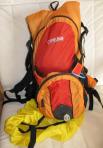
Having had a full size backpack for years it seems that everyone else is moving to a smaller size but still managing to fit everything required into the smaller pockets. I use a slightly smaller size for summer evening use but as it is not waterproof it needs a cover in rain or in muddy conditions. It is orange though.Looking at all the new models being launched my criteria included dry back and waterproof. Lots of pockets would be nice but the critical factor would be colour. Anything called camo, skidmark or brown would not make the list. I liked the praticality of the Wingnut, waterproof and dry back, but starship trooper silver….
Camelbak had the Mule as the forerunner but everyone else including Decathlon seemed to have reasonable contenders too. After much ado I could not decide on anything with certainty so eventually I resorted to Plan B.
I would buy another pack as an interim solution and as it is interim solution it does not count so I can then buy another pack later. Seems logical and reasonable. So this is a review of a possible or a probable but not a definite choice.
The Scudo is one of the new lightweight packs with a better padding arrangement for a less sweaty back then previous Camelbak product but maybe a trampoline or the equivalent is better still. Multiple pockets make for easier sorting and finding so this single main pocket waterproof pack is not the best option.
It has a single main pocket with separate bladder pocket, a front pocket with two net pockets and a key loop and a central open section for a helmet or waterproof.
It does not have a sunglasses pocket, a zip pocket for money, waist strap pockets or any harness pockets but it does have a rain cover. The bladder section has a full length zip which makes it really easy to fit in the full bladder and two options for hose routing.
It is very light, it is less sweaty and everything can be fitted inside. The straps need careful adjustment but it rides light on your back even when full. The central net section is very useful for tubes and spades but a karabiner or two stops anything bouncing out.
A smaller lighter pack is a considerable advantage on both short and longer rides due to less weight on your back but you may need to pack carefully. Even on a short ride the weight advantage is very noticeable and I do not struggle with a full day pack filled with extra layers and sandwiches.
Overall then the Scudo is a nice lightweight pack but with less pockets then you might prefer and is a great interim solution.
Most importantly it comes in orange.

Tifosi glasses


Some mountain bikers go naked but I always wear glasses when riding. When I first started a clear lens was sufficient with separate sunglasses for the rare sunny day but soon I preferred coloured lenses that I could change depending upon conditions.
Older eyes see everything a little more yellow than youthful orbs so the correct lens can improve contrast in some situations or reduce glare without reducing visibility.
I ended up with a multipack which I would carry with me and change lenses as conditions changed.
I liked the idea of a one lens solution but light activated lenses seemed expensive and most of them orientated towards the sunglasses function. Rudy Project looked promising but discounts were unknown but seemed good; but still expensive.
I reviewed all the old magazine articles from times past which I keep filed away in the garage, just like everyone else I am sure, and started looking at manufacturer sites on the internet.
I found the Tifosi site and they had different types of active lenses for different sports. The fishing one looked promising but the “night light” had a specified range of 85% to 27%. This seemed a wider movement than I had expected and would cover the sunglasses need but I worried about dropping into a wooded area from bright light.
I can squint into bright sunlight but peering into the shade I would definitely miss something. Not with my front wheel just with my eyes.

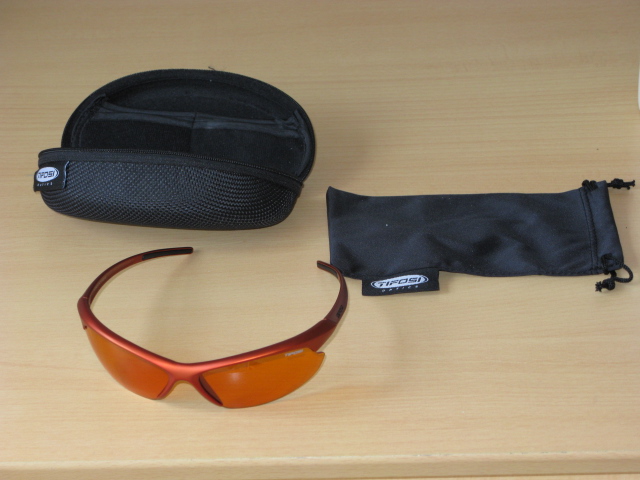
So I looked at their Backcountry Orange. I prefer the orange shading over red and yellow on ski goggles usually, and Backcountry suggests expertise that I plainly do not possess. Sort of Ray Mears for a day stuff.
The range was only 45% to 15% so my concerns were over the sunglasses ability.
I looked for dealers and tried one in Brighton. They had a sample pair of different lenses but they could be ordered. Helpfully they had left on the USA sticker of $60. They wanted £60 though. When I questioned the price I was disappointed by the response so I left without placing an order.
I looked for other dealers but eventually realised I would have to buy without trying somewhere on the internet. But then I found a picture of an orange pair. Form and function. Shallow perhaps but I looked in earnest. I found lots of nil stock but eventually in stock and discounted at http://www.cycleshopping.co.uk. For £26.66 delivered.

The Tifosi’s are great. The range is good and I do not carry separate sunglasses. I tried all the dark to light and back in and out of the trees and back again and they change quickly. It may be that this is due to the reduced range to be covered but I have used them on bright days, on dull days and even at dusk and they have been excellent. I still use clear lenses for night riding but for all other days I just take the one pair.

The frame design fits closely so they do not slip and they are snug to your eyes to prevent insects getting behind them and even when wearing a rain jacket and steaming gently they rarely fog at all.

There is a fault though. If you wear coloured lenses colours change so the sunny day that you are enjoying is not shared by your riding buddies. When you remark how lucky you have been the weather they all look at the grey skies above and wonder what you have in your Camelbak.

Need a parachute?

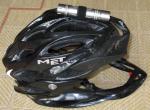
parachute.jpgFor the young, the beautiful and the brave a full-face downhill helmet is probably mandatory to prevent disfiguring injuries and a lifetime living alone.For the average mountain biker airflow is probably key. I know there is an argument for the weight, the colour, the shape, the name or the graphics but when you pedal up a long, steep hill on a hot summer day with the sweat stinging your eyes then airflow counts.The best helmet then is the coolest.

Until your hair begins to disappear or turn grey and things change. Because then you do not fall off and bounce instead you fall off and land like a crumpled jacket. It may not seem to hurt at the time but that is probably due to age related nerve damage or living in your own space-time and that is also, why it hurts the next day.

So you consider some shin pads and full finger gloves but a full-face helmet has to be avoided because if you turn up anywhere with the look of someone who hucks then that is exactly what everyone else expects you to do. You could continually make excuses that it is only for protection but who would listen.

The other downside is pulling off your helmet at the end of the ride and everyone else recoiling in horror at your “locked in the sauna overnight” face. However, there is another option.

A Parachute seems to be an Anaxagore with a chin guard and it looks a bit heavy and constricting but it is not. Surprisingly it does not feel heavier than my V Element when riding and my field of vision is not restricted. The weather is somewhat cool at the moment so summer riding might find a limit but at present it is no hotter. The rear adjustment is a simplified version on the V Element and the internal head shape seems identical. The front chin bar is not restrictive when riding but hydration tubes, energy bar, and even ham sandwiches enter from below and not through the face opening. It is a little tighter to put on and remove so measure your head for the correct size or you will have to ride with folded ears.

So overall no downside but is there a benefit. Yes. The reassurance from the extra protection means that you can try an obstacle or two and concentrate on the task at hand. You may still fall off and it may still hurt tomorrow but you will not bash your face and you may just protect some very expensive dental work and that makes it cheap at the price.